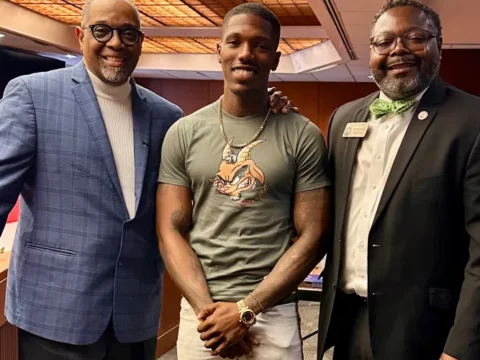

Kenneth Braswell, CEO, Fathers Incorporated
The nation is once again turning its attention to the future of children and youth who enter, linger in, or age out of foster care. A recent Executive Order, “Fostering the Future for American Children and Families,” seeks to modernize systems, expand partnerships, and reduce unnecessary entries into foster care. Woven into its text is a quiet invitation that those of us in the Responsible Fatherhood field cannot afford to overlook. This Executive Order calls for a fuller, more honest collaboration between government, community organizations, and families themselves, and the mothers, fathers, and extended kin who stand at the center of those families can transform outcomes for children.
Fathers Incorporated (FI) has spent more than two decades learning what happens when you strengthen a father’s capacity to show up, stand up, and stay engaged. We’ve witnessed children regain footing, mothers find breathing room, and communities stabilize because a dad discovered the tools and support needed to be fully present. In the world of child welfare, that truth is too often sidelined by outdated assumptions about fathers and by policies that unintentionally sidestep paternal relatives. The result is a system that leans heavily on foster care, even when safe and loving paternal options are available.
Any meaningful child welfare strategy must widen its lens. The “Fostering the Future for American Children and Families” Executive Order’s emphasis on improving data systems, accelerating permanency, and strengthening partnerships creates an opening to bring fathers and paternal kin out of the margins. This is strategic. When fathers are engaged early, when their families are considered as viable kinship placements, and when agencies have the training to do this well, children experience less trauma, fewer moves, and faster pathways to safety and permanency.
The foster care system does not suffer from a shortage of love; it suffers from a shortage of aligned efforts. And the Responsible Fatherhood field stands uniquely positioned to fill a critical gap. We work with men who want to be involved but are navigating complex legal, financial, emotional, and relational barriers. We work with men who were overlooked in the earliest days of their child’s case. We work with men who were never asked whether they wanted to be part of the solution.
This Executive Order’s call for modernization should also be a call for re-humanization: Fathers aren’t an afterthought; they’re a stabilizing force left untapped.
Strengthening paternal engagement is not merely a matter of fairness but a matter of child well-being. When fathers are supported and brought into the core of case planning — when their extended families are seen as assets rather than exceptions — we reduce unnecessary entries into foster care, minimize placement disruptions, and help children maintain identity, culture, and connection.
The question is how we move from possibility to practice.
How Fatherhood Organizations Can Advance a New Vision for Child Welfare
1. Build stronger pipelines between fatherhood programs and child welfare agencies.
Fatherhood organizations already hold the trust of men who often feel alienated by the child welfare system. Establishing formal collaborations — with shared referral pathways, joint trainings, and regular case consultations — allows agencies to engage fathers earlier and more effectively. When fatherhood practitioners are integrated into the child welfare system’s front end, paternal relatives are identified quickly, assessed appropriately, and considered as viable placement and support options.
2. Offer specialized training that helps child welfare professionals engage fathers consistently and without bias.
Child welfare workers are overburdened, and most have never received training focused explicitly on fathers. The field needs models that teach how to locate fathers, understand their legal and emotional realities, and assess paternal kin networks. Offering father engagement training grounded in empathy, cultural awareness, and trauma-informed practice can shift workplace norms and accelerate permanency.
3. Advocate for policy reforms that ensure paternal kinship placement is prioritized.
Too many fathers learn about child welfare involvement after major decisions have been made about their children. Fatherhood organizations can elevate stories, data, and policy recommendations that emphasize early identification, equal consideration of both sides of the family, and streamlined access to services that help fathers meet safety standards. This includes advocating for technology updates, improved information sharing, and flexible funding to support paternal engagement interventions.
The child welfare system is not broken because it lacks compassion. It is strained because it has not yet learned how to harness the full strength of the families it serves. Mothers carry tremendous weight. Fathers carry tremendous potential. And when both sides of a child’s family are engaged, supported, and resourced, the entire arc of that child’s life can shift.
If this Executive Order marks a turning point in modernizing structures, then the Responsible Fatherhood field must mark a turning point in modernizing perceptions. We know fathers matter. We know their families matter. And we know a system that overlooks them is a system that will continue to lose children in the gaps.
This is a moment to align purpose with policy, narrative with practice, and federal ambition with community expertise. Strengthening fathers is not a side initiative but a core strategy for reducing foster care involvement, stabilizing families, and giving our children what every child deserves: the grounding presence of the people who love them most.