
Co-parenting comes with real complexity. Real pain. Real history. But even then, especially then, honoring the mother in front of the kids is not weakness; it’s protection. You don’t have to be best friends with your co-parent, but you must be respectful partners to raise a child who feels secure.
Honoring women is also healing. One day, your children will become adults who repeat what they learned at home. Help them repeat honor. This is how we raise the next generation to value women with dignity.
by Dr. Matisa Wilbon, Moynihan Institute for Fatherhood Research and Policy
Women’s History Month is a time to celebrate women who’ve changed the world, and I want us to start with women who change a world every day, quietly and often without applause: mothers and mother figures. Women who pack lunches, track appointments, remember which kid likes which cereal, notice mood shifts, pray over backpacks, hold it together in public, and cry in private. The women who show up again and again because their love doesn’t clock out.
If we want to honor women during Women’s History Month, we can’t only talk about famous women. We have to honor the women our children know personally.
The most influential “history” in a child’s life is the home they grow up in, and mothers are teaching the next generation every day. Whether she’s a biological mother, stepmother, grandmother, auntie, foster mom, godmother, big sister, church mother, or mentor, mother figures are often the first classroom for:
- Love
- Discipline
- Faith
- Resilience
- Identity
They also model what it means to keep going, and our kids are watching how these women are treated, including:
- How we speak about them in real time
- How we talk about them when we’re upset
- How we respond when we disagree
- How we describe them when they’re not in the room
A Women’s History Month Challenge for Fathers
The way you speak about mothers and mother figures in front of your kids shapes how your kids value women for the rest of their lives.
Honor isn’t flattery; honor is protection. We don’t honor mothers by pretending they’re perfect, denying conflict, or ignoring wounds. We don’t have to say, “Everything is fine.” Honor is more powerful.
Honor is refusing to turn a mother into a target in front of the children she loves.
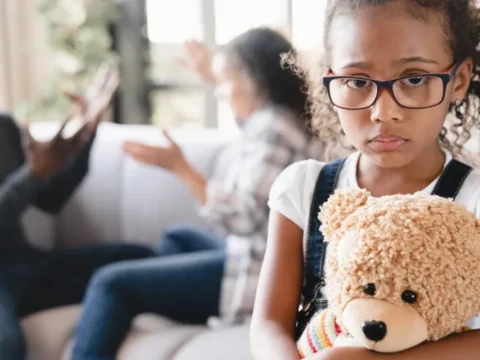
When we attack a mother in front of her children, they don’t recognize it as “adult frustration.” They hear:
- “Part of me is wrong.”
- “Loving my mom is unsafe.”
- “My family is unstable.”
Even if the child doesn’t say any of this out loud, their body carries it, and this is where fathers have to be honest. It’s easy to praise “mothers” in general, but it’s harder to honor the mother your child is attached to when emotions run hot.
Children don’t learn respect from speeches; they learn from patterns. They learn what women deserve by watching how men speak about women. So here’s a rule fathers can live by, whether you’re married or co-parenting: Challenge privately; honor publicly. Specifically,
- If there’s frustration, handle it adult-to-adult.
- If there’s disagreement, keep your child out of the crossfire.
- If the child asks questions, answer with truth, not character assassination.
Your child doesn’t need your full opinion about their mother or mother figure; they need stability. And they need helpful, not hurtful, answers to their real, sometimes blunt, questions:
- “Why does Mom do that?”
- “Why are y’all not together?”
- “Why are you mad at her?”
- “Why does Grandma always…?”
Fathers can tell the truth and still honor mothers.
Phrases That Honor Your Child’s Mother When Separated
Using these phrases in conversation can keep your child safe and respect motherhood.
What to say when you disagree with a mother figure’s decision:
- “We may see it differently, but we both love you.”
- “Your mom is doing the best she can. Let’s talk about what you need.”
- “This is adult business. It isn’t yours to handle.”
What to say when your child complains about their mom:
- “I hear you. What happened?”
- “Let’s talk about what you needed in that moment.”
- “We can be honest without being disrespectful. Your mom deserves honor.”
What to say when you’re tempted to vent:
- “I’m not going to speak about your mom like that.”
- “That’s not for you to hold.”
- “Let me handle this the right way.”
These aren’t just “nice phrases.” They’re leadership. Co-parenting comes with real complexity. Real pain. Real history. But even then, especially then, honoring the mother in front of the kids is not weakness; it’s protection. Honoring your co-parent tells your child:
- “You can love your mom without guilt.”
- “You don’t have to be my therapist.”
- “You don’t have to choose sides to be safe.”
You don’t have to be best friends with your co-parent, but you must be respectful partners to raise a child who feels secure.
How Married Fathers Can Honor What Mothers Carry
Mothers and mother figures carry more than we realize. In many families, mothers carry most of the mental load. Their invisible planning and emotional labor make a home function.
Even when dads are present and loving and even when we advocate for more father-inclusive spaces, mothers are very often the default for:
- School communication
- Medical decisions
- Emotional check-ins
- Scheduling
- Remembering what everyone needs and when
Honoring mothers is not just saying, “You’re amazing.” It’s also refusing to undermine the woman who carries so much of the family system. Kids should grow up hearing their mother appreciated, not just corrected. For married fathers, honor looks like:
- Speaking well of her in front of the kids
- Backing her leadership publicly
- Disagreeing privately and respectfully
- Making sure your kids hear you praise her contributions
How Dads Can Commit to Honoring Mothers
Here’s a simple commitment you can make this month:
- I will not use my child as a place to store my frustration about their mother.
- I will not teach my child disrespect in the name of honesty.
- I will honor the mother figures in my child’s life with my words and actions, especially when I’m upset.
To put this intor practice, try this exercise for the next seven days. Say one honoring sentence daily about a mother or mother figure within earshot of your child. These small sentences have big impact:
- “Your mom works hard. I respect that.”
- “Your grandma has carried a lot for this family.”
- “I appreciate how your auntie always shows up.”
- “Your mom loves you so much. I never want you to question that.”
Women’s History Month isn’t only about the famous women we celebrate publicly; it’s also about how we privately honor the women in our own lives. So to every father — married or co-parenting — this is your invitation:
Honor mothers and mother figures in front of the kids, not because it’s trendy, but because it’s righteous. Because it heals. One day, your children will become adults who repeat what they learned at home. Help them repeat honor. This is how we raise the next generation to value women with dignity.