The responsible fatherhood field has spent decades teaching men how to show up after the birth. But Black maternal health demands we teach men how to show up before it, during it, and long after the hospital bracelets come off.
It starts with learning, being present, speaking up when necessary, and building a partnership strong enough to hold the weight of a family’s most precious and vulnerable hours.
By Kenneth Braswell, CEO, Fathers Incorporated
A man can love his child before the child ever takes a breath, yet still underestimate the moment that love will be tested most. Pregnancy is not simply a season of anticipation. It is a high-stakes human and medical experience, and for too many Black women, it is a place where joy and danger share the same waiting room.
That truth is why Charles Johnson’s work matters so deeply. He did not choose this mission: It chose him through grief. When he speaks about Black maternal health, he speaks from the sharpest classroom life can build. His story, and the movement he has helped propel through 4Kira4Moms, confronts a fact we keep trying to soften with polite language: Black women are dying at rates that should shame a modern health system, and too many of those deaths can be prevented.
Fathers’ Role in Maternal Health
Fathers belong in the middle of the fight for maternal health — not on the sidelines and not as spectators — because maternal health is family health. The moment a mother is endangered, the father is not merely watching the stats about risk. He is witnessing the possible collapse of a child’s future, his child, the possible fracture of a family’s foundation, and the potential for grief to raise a child alongside love.
A father’s advocacy isn’t about control. It’s about readiness. Fathers must be fluent in what’s happening to the woman carrying his child, so he can stand beside her with clarity when she is exhausted, in pain, or not being heard.
That is the hinge of this moment.
The responsible fatherhood field has spent decades teaching men how to show up after the birth. But Black maternal health demands we teach men how to show up before it, during it, and long after the hospital bracelets come off.
Too often, dads want to help but have never been taught how to translate love into action in a clinical setting. But through the National Responsible Fatherhood Clearinghouse (NRFC), Fathers Incorporated (FI) has put language to what dads keep asking for: What do I do, specifically? The NRFC’s practical guidance for pregnancy, delivery, and postpartum makes something plain: Fathers can be a stabilizing force for mothers, and that stability can impact outcomes.
Here’s what that looks like:
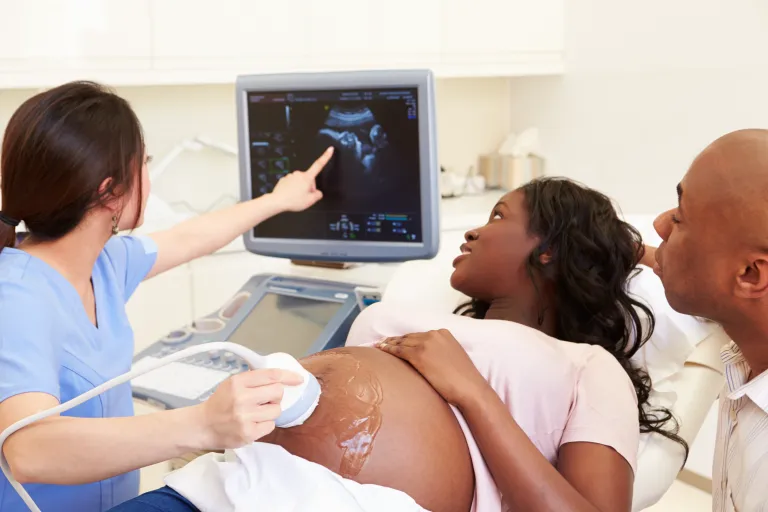
- During pregnancy, an engaged father treats prenatal visits as essential, not optional. He learns the mother’s health history and risk factors. He asks what the warning signs are. He helps build a birth plan and understands it well enough to repeat it when she cannot. He reduces stress at home. He becomes the kind of partner whose presence calms the room rather than complicates it.
- During delivery, an engaged father becomes a communicator. Clear. Focused. Respectful. He is prepared to ask, “What is the risk? What is the alternative? What happens if we wait?” He’s prepared to say, “We need someone senior to assess this now,” when his instincts and the mother’s voice align. He keeps the mother’s wishes visible when systems move fast, and attention drifts.
- After delivery, an engaged father refuses to treat postpartum as a footnote. Many maternal deaths occur after birth. This alone should change how fathers plan. Postpartum is where follow-up matters, warning signs can surface, and exhaustion and isolation can turn dangerous. An engaged father watches for complications, supports rest and recovery, sets boundaries around visitors, helps with feeding and household needs, and takes maternal mental health seriously.
A father who can advocate for the mother of his child must also know how to be her teammate, even when romance is strained or gone. Co-parenting maturity is not a soft skill. It’s a survival skill. When communication collapses, mothers carry stress alone. When conflict escalates, families delay care, avoid appointments, and isolate. But when fathers learn to communicate with empathy and solve problems without ego, they become safer partners in pregnancy and postpartum and more effective fathers afterward.
This is also where the fatherhood field can become a true partner to 4Kira4Moms and the emerging ecosystem around 4Kira4Dads.
Maternal Health and Responsible Fatherhood
Fatherhood organizations already have what maternal health advocates need at scale: trusted entry points to men, curriculum infrastructure, peer cohorts, coaching models, helplines, media channels, and credibility with fathers who often distrust “systems” but will trust a brother who has been through it.
4Kira4Moms brings what the fatherhood field needs just as urgently: a clear policy agenda, a national spotlight on preventable harm, and the moral clarity to say that “normal” cannot be acceptable when mothers are dying.
So how might these partnerships work? Fatherhood programs can embed maternal health readiness into their standard fatherhood curriculum as a core competency of responsible fatherhood, not a special topic. They can host joint workshops with Black maternal health groups so dads hear directly from clinicians, doulas, and mothers who can name what advocacy looks like in real time. Fatherhood agencies can collaborate with hospitals and health systems to develop father-inclusive practices that consider fathers as patient safety allies, not just men with visitor badges. And fatherhood programs can train dads in hospital communication and escalation pathways, so their advocacy is calm, informed, and effective.
A partnership between maternal health and responsible fatherhood can also influence policy. Paid family leave is not just a workplace benefit; it is a maternal health intervention allowing fathers to attend prenatal visits, be present at delivery, and support recovery. Postpartum coverage and continuity of care should be treated as non-negotiable health protections, not optional add-ons. Hospitals and systems should be held accountable for outcomes and disparities with transparency and urgency, especially where patterns of dismissal and delay become predictable.
One more truth belongs here, and it belongs here without hesitation.
Any call for fathers to be more present must never become cover for coercion, intimidation, or abuse. Family safety is paramount. Violence is never acceptable. Advocacy is not dominance. Advocacy is protection without threat, leadership without control, partnership without fear. If a relationship includes violence or coercive patterns, the solution is not “more access.” The solution is safety, accountability, and intervention that protects mothers and children.
Black History Month invites us to honor legacies of protection, courage, and collective responsibility. The next chapter of that legacy can be written in hospital rooms and postpartum homes, in prenatal waiting rooms and late-night kitchen cleanups, in fathers who understand that love is not only what you feel, it is what you prepare for and protect.
Charles Johnson’s work is a call. Not only to mothers. To men.
Fathers who want to be present for their children must also be present for the mothers who bring those reed-thin lives into the world. That presence starts long before the first cry. It starts with learning, showing up, speaking up when necessary, and building a partnership strong enough to hold the weight of a family’s most precious and vulnerable hours.