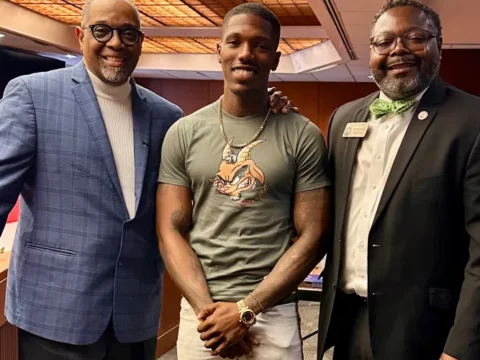

By Kenneth Braswell, CEO, Fathers Incorporated
There’s a moment in my recent conversation with Dr. Dominic Shattuck, a community psychologist and Johns Hopkins scholar, that I can’t shake. As we talked for an episode of my I Am Dad Podcast, he told me about his daughter, who had been bitten by a baby copperhead in their backyard one quiet evening. He described the fear, the rush to the hospital, and the relief that followed when she was okay.
Somewhere in that story, I heard something deeper than just a father’s instinct. What I heard was availability — the kind of presence and consistency that’s there when life gets unpredictable, when love and protection are one act.
It reminded me of a quote from Coach Herm Edwards: “The best ability is availability.” That line has always resonated with me, especially in the work we do at Fathers Incorporated (FI). When we talk about what it means to be a man, husband, or father, we often rush to words like “provider,” “protector,” or “leader,” but none of that matters if we aren’t available.
Availability is the soul of fatherhood. It’s what our children feel when they call out “Daddy!” in the middle of the night, and someone actually answers. It’s what our partners sense when we choose to be present, even when we’re not perfect.
Dr. Shattuck and I found common ground in that space — the intersection between how men see themselves and how the world has taught them to show up. He spoke about growing up without his biological father and how that absence shaped both his empathy and his mission. “I’m not burdened by a father,” he said. “I’ve seen what care looks like from others (coaches, mentors, uncles), and that’s why I do this work.”
His research exposes a truth many of us in this field have known intuitively: Men’s health is not just a medical issue; it’s a relational one. The way we define masculinity determines how we treat ourselves, how long we live, and how well we love.
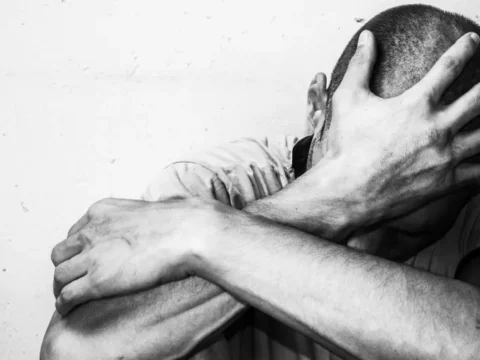
Men continue to die younger than women, avoid doctor visits, and ignore early signs that something’s wrong. It’s not because they don’t care about their health but because masculinity has taught them to endure pain instead of address it.
In our conversation, Dr. Shattuck pointed out how public health systems unintentionally reinforce that neglect. Women’s reproductive health draws them into consistent medical care (annual visits, screenings, and other check-ins), but men have no such entry point. There is no “routine moment” in a man’s life that brings him back to the doctor. By the time most men seek care, it’s reactive, not preventive.
That truth hit me personally. Not long ago, I found myself sitting in a dentist’s chair, face swollen from an infection I didn’t see coming. Years of neglect caught up with me in a single day. The nurse told me, “You’re in this pain because you couldn’t find seven minutes a day to take care of yourself.”
Seven minutes. That’s all it takes to preserve what you could lose forever.
That moment sent me on a self-care journey. Like many men, I didn’t start it until my body forced me to. And in that process, I realized something that fathers everywhere need to hear: Taking care of yourself is an act of love for the people who depend on you.
I often tell dads, “The diaper you change today may one day be your own.” It’s funny until it’s not. Because when you neglect your health, habits, and mental space, you’re not just shortening your own life — you’re shrinking the circle of love for those who depend on it.
Dr. Shattuck’s work underscores that public health has a blind spot: men. Although men are not invisible, their pain often wears the mask of strength. Public health can’t reach men if it continues to design systems that speak a language men have never been invited to learn.
This is where organizations like FI step in. For nearly two decades, we’ve worked to reframe fatherhood not as a social category separate from public and community health but as its foundation. When fathers thrive, families thrive, and when families thrive, entire neighborhoods stabilize.
We can’t separate men’s health from fatherhood any more than we can separate a heartbeat from a body. The emotional, physical, and spiritual wellness of men is a public health issue. It influences how children are raised, how relationships survive, and how communities heal.
Dr. Shattuck reminded me that while the conversation around masculinity is evolving, it’s not complete until public health sits at the table. The missing link isn’t just better medicine but better connection. Men don’t need judgment: They need invitations to care for themselves and permission to be vulnerable in the process.
The question now isn’t whether we have the courage to address this problem. If we want stronger families, we must build systems that prioritize men’s health. If we want healthier children, we must model for them what self-care looks like. And if we want a more compassionate culture, we must finally recognize that masculinity, fatherhood, and public health are not separate conversations but one and the same.
The truth is simple: A healthy man is a healthier father, and a healthier father builds a healthier world.