A halftime show cannot heal what our culture keeps reopening. It can’t carry the weight of every taste, every tribe, every wound, every algorithm, or every complaint that has been waiting all year for this public stage. We are asking art to do what relationships require time to do.
By Kenneth Braswell, CEO, Fathers Incorporated
We demand one performance to satisfy a country that can’t even agree on reality.
That’s the assignment we hand the Super Bowl halftime show every year. Be universal. Be current and nostalgic. Be safe and daring. Be family-friendly and edgy. Be for everybody, and do it in 13 minutes with a marching army of cameras, pyrotechnics, sponsorship expectations, and a nation hovering over the comment button.
So when a Super Bowl halftime performance becomes record-breaking, that number doesn’t just measure popularity. It measures pressure. It’s the biggest living room in America, and every living room has a different remote.
Much of this tension stems from a moment the NFL never forgot. Halftime used to be the break in the program, not the program itself. Then, in 1992, the league learned a hard lesson when viewers had other options. Once that door opened, halftime stopped being filler and became a battleground for attention. From that point on, the Super Bowl halftime show was no longer judged as entertainment alone. It was judged as a national statement.
Ever since, the show has been less like a concert and more like a referendum.
That’s why it can pull millions upon millions of viewers and still get dragged the moment the last note lands. And people aren’t only reviewing vocals and choreography. They’re reviewing what they believe the NFL is signaling about culture, identity, generation, and whose version of America gets center stage. They read the show as politics even when the artist is simply performing art. They ask, “Who was this for?” and “Was I invited?”
The halftime show is one of the few remaining moments when generations are forced into the same room. Grandparents, parents, teenagers, little kids, and cousins who don’t agree on anything all watch the same thing at the same time.
This is why the search for the perfect halftime show is really a search for something else: not perfect music, but perfect unity. And that’s the mistake.
A halftime show cannot heal what our culture keeps reopening. It can’t carry the weight of every taste, every tribe, every wound, every algorithm, or every complaint that has been waiting all year for this public stage. We are asking art to do what relationships require time to do.
The Architecture of a Successful Super Bowl Halftime Show
Still, if the goal is to make most people feel seen, the best halftime show isn’t built around one artist. It’s built around an architecture.
Start with something that belongs to everyone. Rhythm is the most democratic language we have. Before lyrics, before genre, before the arguments begin, a stadium-wide pulse can unify the room for at least a moment.
Then honor generations without turning the setlist into a museum. The smartest structure is a three-part bridge: a legacy icon, a current star, and a musical director who can stitch genres together in a way that feels intentional, not random. This combination addresses the most common complaint: “This wasn’t for me.”
End with a shared chorus. The best public moments in American life have always included a line that people can say together. Great speeches do it with repetition. Great songs do it with a hook that belongs to everybody in the room. A closing sing-along doesn’t eliminate criticism, but it lowers the temperature because participation changes how people feel.
A Fatherhood Moment at Super Bowl LX
Year after year, in the middle of all this arguing about the halftime show, the actual game almost always gives us what we claim we want: a story that cuts through noise.
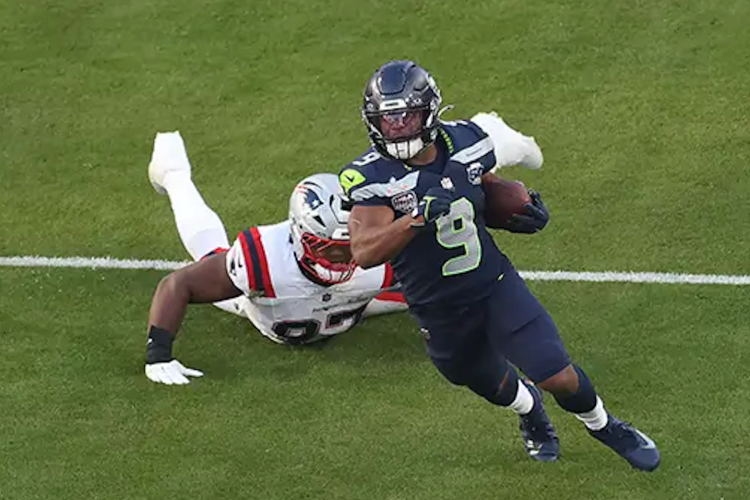
Super Bowl LX and MVP Kenneth Walker, III, gave us one of those moments: a son reaching the pinnacle of his profession on the biggest stage, with his father there in person for the first time. The story isn’t tidy, but its impact is real – the power of fatherhood hiding in plain sight.
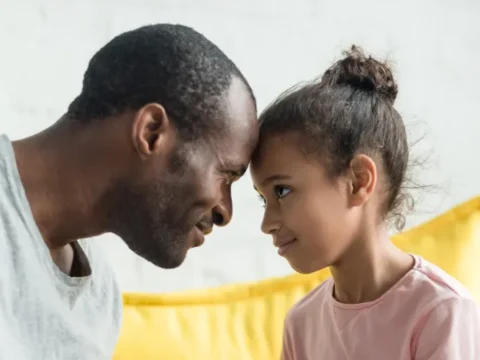
Fatherhood is not a performance. It’s the decision to show up and the courage to step into the room even if you feel behind, even if you can’t rewrite what you missed, even if you don’t know how the moment will receive you. That’s true in a stadium and in a living room.
Some people think showing up late means you shouldn’t show up at all. That lie has kept too many families fractured. But even when it’s “late,” presence has power. It doesn’t erase the past. It doesn’t cancel the pain. But it creates a new memory, and sometimes a new memory is the first brick in rebuilding trust.
That’s why the halftime debate is worth more than jokes and hot takes. It reveals something about us. If we can’t share 13 minutes without turning it into a cultural battlefield, that says something about our ability to gather. About our patience. About our willingness to let something be for somebody else without making it an insult to us.
The halftime show isn’t just entertainment. It’s a stress test for multi-generational America.
Maybe the real question isn’t why the halftime show can’t satisfy everyone, but why we keep demanding that it should.
And maybe the best thing the Super Bowl gives us every year isn’t a dynamic performance but a reminder that we are still watching together, still arguing in the same house, still capable, at least once in a while, of pausing long enough to witness something bigger than ourselves.
Showing up — even imperfectly — is still a kind of love.