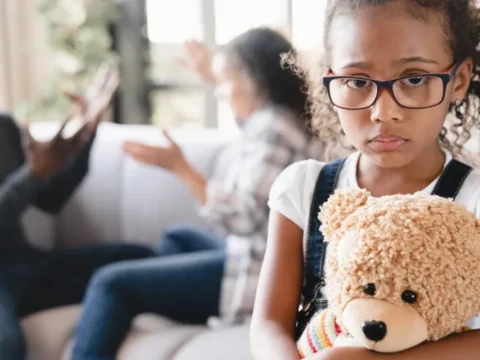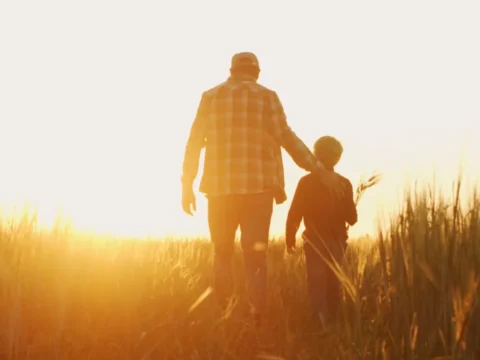
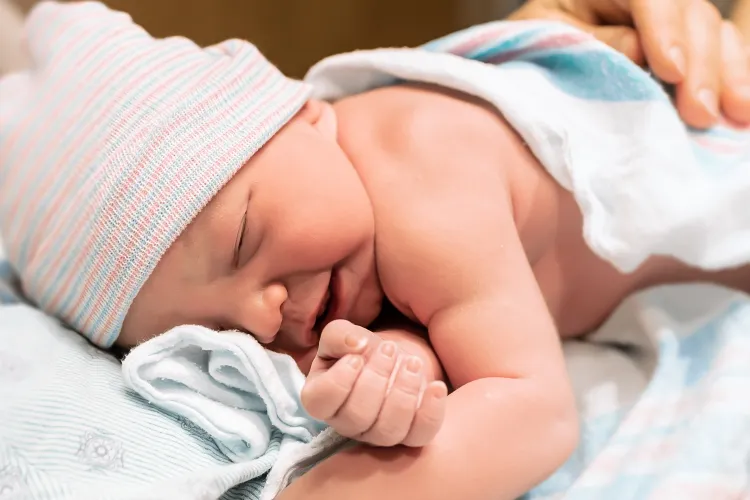
A child born outside of marriage isn’t automatically a child born outside of fatherhood. A mother giving birth while unmarried doesn’t mean the father is absent, unwilling, irresponsible, or irrelevant. It simply means the parents weren’t married at the time of birth.
A child isn’t fatherless when the parents are unmarried. A child isn’t fatherless when the father lives in another home. A child isn’t fatherless when the parents are no longer romantically connected. Father absence is real, the pain of abandonment is real, and the consequences of disengagement are real. However, we can’t keep confusing living arrangements with love, legal status with commitment, or marital status with fatherhood.
By Kenneth Braswell, CEO, Fathers Incorporated
The Census Bureau has given us a data point. Do we have the courage to ask what it really means?
According to a recent Census Bureau article, the number of women who were unmarried when they gave birth in 2022 dropped to about 1.2 million, a decline of roughly 15% since 2011. On the surface, some will read that as a story about marriage. Others will read it as a story about morality, family structure, or social decline. Some will pull out the same tired language that has followed unmarried parents for generations, placing mothers under a microscope and fathers under suspicion.
But if we care about children, we have to read the data differently.
Every child counted in this Census report has a father.
That may sound obvious, but in public policy, media narratives, social services, and even casual conversation, we often behave as if fatherhood only becomes real when marriage confirms it, when residence proves it, or when a court document recognizes it. We have allowed marital status to become a shortcut for judging a father’s family commitment and unmarried birth to become a quiet synonym for father absence. We have allowed the phrase “born to an unmarried mother” to carry assumptions that the data itself doesn’t prove.
Where Are Fathers in the Census Data on Unmarried Births?
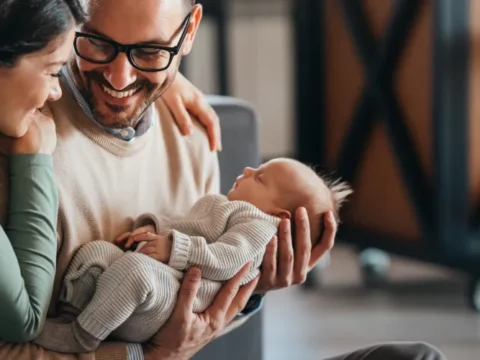
The Census tells us whether the mother was married when she gave birth. It doesn’t tell us whether the father was at the hospital, cut the cord, or held the baby against his chest. It doesn’t tell us if he changed the first diaper, drove to the first pediatric appointment, helped with rent, stayed up through the night, or cried in the parking lot because he wanted to be more prepared than he was. It doesn’t tell us if he’s trying or if he’s blocked, and it doesn’t tell us whether he’s present in ways our systems don’t measure.
That’s the danger of data without context. Numbers can reveal truth, but they can also reinforce old assumptions if we don’t ask better questions. A child born outside of marriage isn’t automatically a child born outside of fatherhood. A mother giving birth while unmarried doesn’t mean the father is absent, unwilling, irresponsible, or irrelevant. It simply means the parents weren’t married at the time of birth.
This distinction matters because nearly one-third of recent births in this country still occur outside marriage. That’s not a small population living at the margins of American family life: It’s a major part of the American family story. If our laws, hospitals, social services, schools, child support systems, and family courts are still built around outdated assumptions about what family looks like, then we are behind the times and actively failing children.
The conversation about fatherhood has to mature beyond the old question of whether parents are married. Marriage can be a beautiful and stabilizing institution. Healthy marriage matters. Stable two-parent households matter. Children benefit when parents have strong, cooperative, loving relationships. But marriage can’t be the only doorway through which a father is seen, supported, or legally recognized.
We need to stop treating fatherhood as if it begins with a wedding ring.
For many fathers, especially unmarried fathers, the birth of a child is the beginning of a deep emotional commitment. But too often, it’s also the beginning of confusion. A man may sign a birth certificate and believe he has done what is necessary. He may acknowledge paternity and believe the law sees him as a father. He may pay child support and believe meeting that responsibility comes with recognition of his relationship with the child. Then one day, when conflict arises, when access is denied, when a medical decision must be made, when a school record must be requested, or when tragedy strikes, he discovers that biology and responsibility weren’t enough.
In Georgia, for example, the state court system tells unmarried fathers plainly that if a child was born in Georgia and the father wasn’t married to the mother within the required time period, he has no parental rights under Georgia law without legitimation, even if he signed the birth certificate, lived with the child, had a relationship with the child, or paid child support.
Sit with that for a moment. A father can be known to the child, the mother, the child support system, and the family, and still not be fully known to the law.
This is where Census data becomes more than a demographic snapshot. It becomes a mirror. It asks whether we are willing to build family policy around the families that actually exist, not only the families we prefer to imagine.
Geography and Poverty Factor Into Unmarried Births
The Census article on births to unmarried mothers also points to geography. Eight Southern states — Alabama, Florida, Kentucky, Louisiana, Mississippi, South Carolina, Texas, and West Virginia — had higher levels of recent births to unmarried women than the nation. For those of us doing responsible fatherhood work in the South, this shouldn’t be read as a reason to shame families but as a call to strengthen systems.
If the South has higher shares of births outside marriage, then the South needs:
- Stronger fatherhood infrastructure
- Clearer legal pathways for unmarried fathers
- Hospital-based father engagement
- Prenatal fatherhood education
- Child support systems that do more than collect money
- Co-parenting support before conflict becomes a court case
- Family-serving agencies that stop asking only, “Where’s Mom?” and start asking, with equal seriousness and respect, “Where’s Dad, and how do we help him show up safely and consistently?”
At the state level, the Census Bureau also reports a correlation between the percentage of unmarried women with a recent birth and the percentage of people living in households below the poverty line. This tells us something powerful: This isn’t just a marriage conversation but an economic one.
Too often, America wants to talk about family structure without talking about family stress and about marriage without talking about wages. And too often, we talk about responsible fatherhood without talking about unemployment, housing, transportation, child support debt, incarceration, mental health, education, and the cost of simply surviving.
Many unmarried parents aren’t rejecting stability; they’re trying to create stability under unstable conditions. Some are working multiple jobs. Some are navigating co-parenting while living apart, trying to rebuild trust after the romantic relationship ended, and dealing with the residue of their own childhood wounds. Some are young and overwhelmed. Others are older and still trying to repair what they didn’t understand when they were younger. Some are fathers who want to be present but lack legal knowledge, emotional tools, financial footing, or a system that welcomes them before it judges them.
A New Front Door for Father Engagement
If poverty and unmarried births are connected, then we must pair compassion with investment.
A fatherhood response to this Census data shouldn’t be, “Look how many children are born outside marriage.” A fatherhood response should be, “Look how many children need us to make sure policy, poverty, or presumption don’t make their fathers invisible.”
This means we need a new front door for father engagement.
Father-Inclusive Prenatal Care and Maternal Health
The front door should open during pregnancy, not after crisis. Fathers should be invited into prenatal education, maternal health conversations, birthing plans, postpartum support, and early childhood development. When we talk about maternal health, we should also talk about the father’s role in supporting the mother before, during, and after birth. When we talk about infant health, we should talk about paternal mental health. When we talk about child well-being, we should talk about co-parenting health.
Father-Inclusive Education on Parental Rights
The front door should open at the hospital, where unmarried fathers receive clear, plain-language information about paternity, legitimation, child support, parenting rights, and responsibilities. Not a stack of confusing forms. Not a rushed signature. Not a legal maze disguised as a clipboard. Fathers need to know what they are signing, what they are not signing, what rights are established, what rights are not established, and what steps must come next.
Father-Inclusive Systems
The front door to father engagement should open in child support offices, where financial responsibility should be connected to parenting opportunity. A father shouldn’t be treated as a wallet in one system and a stranger in another. If the State can find him to establish an order, it should also be able to help him understand parenting time, legal rights, employment support, mediation, and co-parenting resources.
The front door should open in schools, pediatric offices, early childhood programs, Head Start centers, child welfare agencies, and community-based organizations. Every place that serves a child should be prepared to engage both parents whenever safe and appropriate — not as an afterthought or special initiative and not only on Father’s Day but as standard practice.
This requires us to change the story.
A New Narrative for Father Absence
For decades, the public narrative around unmarried birth has leaned toward blame. Mothers were blamed for having children outside marriage. Fathers were blamed for not being present. Children were labeled as fatherless before anyone asked where their fathers were, what barriers stood in the way, or what kind of support might help the family function better.
This language has done damage. Children hear it, fathers feel it, mothers carry it, and systems repeat it.
But a child isn’t fatherless when the parents are unmarried. A child isn’t fatherless when the father lives in another home. A child isn’t fatherless when the parents are no longer romantically connected. Father absence is real, the pain of abandonment is real, and the consequences of disengagement are real. However, we can’t keep confusing living arrangements with love, legal status with commitment, or marital status with fatherhood.
There is no such thing as a fatherless child. There are children whose fathers are absent. There are children whose fathers are unknown to them. There are children whose fathers are blocked, broken, disconnected, deceased, incarcerated, ashamed, struggling, or trying to find their way back. There are also children whose fathers are deeply involved, though unmarried, nonresident, or legally unrecognized.
The question isn’t whether the father exists. The question is where he exists in the life of the child, in the heart of the family, and in the design of our systems.
A Clear Agenda for Responsible Fatherhood
Census data on unmarried mothers gives us one count while exposing what we fail to count. We count unmarried mothers. We count births. We count states. We count poverty. But do we count the fathers standing nearby? Do we count the fathers trying to legitimate their children? Do we count the fathers attending co-parenting classes? Do we count the fathers showing up at school events even when their names aren’t on the forms? Do we count the fathers who want to do better but don’t know where to begin?
A responsible fatherhood agenda for this moment must be clear:
- Support healthy marriage where marriage is desired and safe.
- Support unmarried co-parenting where marriage isn’t the current reality.
- Support legal recognition where fathers are committed and safe.
- Support mothers without erasing fathers.
- Support fathers without diminishing mothers.
- Support children by refusing to make them choose between the people who gave them life.
The Census can tell us how family formation is changing, but it’s our responsibility to make sure that change doesn’t leave fathers unseen and children unsupported.
Every birth certificate tells part of a story. Every Census table tells part of a story. But somewhere beyond the numbers is a newborn child, a mother recovering, a father trying to understand who he is now, and a family system that will either help them build something healthy or leave them to figure it out alone.
We already know how the old story sounds.
It’s time to write a better one.