The future of the fatherhood movement must be disciplined, compassionate, research-informed, and child-centered. It must be brave enough to challenge courts, child support systems, child welfare agencies, legislatures, and even fatherhood programs themselves.
The measure of our fatherhood advocacy won’t be how loudly we defend fatherhood, but how effectively we build systems in which children no longer have to lose a parent for adults to feel that justice has been served.
By Kenneth Braswell, CEO, Fathers Incorporated
There’s a danger in the way America talks about fatherhood when families separate. Too often, we flatten the conversation into opposing sides. Fathers versus mothers. Rights versus responsibilities. Child support versus parenting time. Safety versus access. Court orders versus lived experience. The debate becomes so crowded with accusations that the child almost disappears its center.
That is why fatherhood advocacy must be reclaimed for what it is at its best: not a campaign against mothers, not a defense of every man regardless of behavior, and not a refusal to hold fathers accountable. Fatherhood advocacy, when rooted in responsibility, safety, healing, and policy change, is child advocacy. It’s the insistence that children shouldn’t lose a loving, capable, and willing parent simply because the systems designed to help families are adversarial, outdated, expensive, or indifferent.
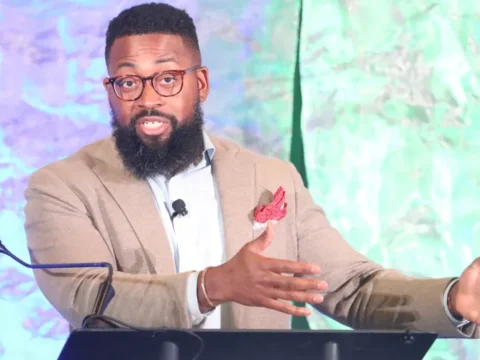
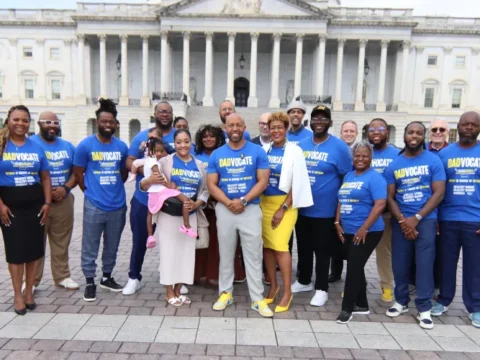
At the National Council for Equal Shared Parenting (NCESP) Summit in Washington, D.C., I heard that truth repeated in different ways throughout the day. Some speakers came with research. Some came with legislative proposals. Some came with legal analysis. And some came with stories of devastation, resilience, and hard-earned wisdom.
Beneath every presentation lay a shared concern: What happens to children when family systems treat fathers as optional, disposable, or primarily as financial instruments rather than as full human beings with emotional, developmental, and relational value in their children’s lives?
When Dads Become Fatherhood Advocates
Josh Bergman, a father from Northwest Wisconsin, described entering family court with faith in the system, then leaving broken — financially, emotionally, and physically. He spoke of spending $180,000 in court costs, losing meaningful time with his children, and eventually finding hope through social media networking and advocacy.
Fathers like Bergman don’t always arrive at advocacy looking for a fight. They arrive because they’ve been fighting alone for too long to insist:
- A father who wants to remain present shouldn’t have to be destroyed before anyone believes he’s serious.
- A father shouldn’t have to lose his savings, mental health, reputation, or years of his child’s life before he is seen as worthy of support.
- Mothers shouldn’t be left to carry the full weight of parenting because systems failed to create pathways for fathers to remain productively engaged.
- When fathers are safe, willing, and able, their presence shouldn’t be treated as a bonus but as an essential part of a child’s foundation.
These aren’t sentimental claims. They’re core aspects of family policy reform and fatherhood research. The responsible fatherhood field has long understood that children do better when fathers are positively involved in their lives. But positive involvement doesn’t happen through wishful thinking. It requires systems that support it, laws that recognize it, and programs that prepare men for it. It requires courts that don’t conflate adult conflict with the absence of parental value. It requires child support policy that encourages responsibility without punishing poverty. It requires co-parenting support, legal navigation, mental health resources, employment assistance, and father-inclusive human services.
Fatherhood Advocacy in Child Support Reform and Child Welfare
Don Hubin of the National Parents Organization participated in the NCESP Summit, as well. In his discussion of Title IV-D and the child support system, Hubin noted that the federal child support program serves roughly one in five children in the United States and collects nearly $30 billion annually, according to data from the U.S. Department of Health and Human Services’ Office of Child Support Enforcement (OCSE), which reports that the program reaches tens of millions of children nationwide. He challenged the idea that collections alone are the measure of success. The deeper question is whether the child support system strengthens families or whether, in too many cases, it increases debt, reduces employment stability, and makes father involvement harder.
That question should concern everyone who cares about children. When child support orders are set beyond a low-income father’s ability to pay, when enforcement tools suspend licenses needed for work, when arrears become unmanageable, and when parenting time is disconnected from financial responsibility, the result isn’t stronger families. The result is often despair, avoidance, conflict, and deeper instability. A father who’s crushed by debt and cut off from his child isn’t better positioned to parent, provide, or heal.
We need a child support system that distinguishes between fathers who refuse responsibility and fathers who are trying to meet it under impossible conditions. There is a moral difference between unwillingness and inability, and our policies must be wise enough to know the difference.
The same is true in child welfare. Connie Reguli, an attorney and founder of the Family Forward Project, spoke about the importance of citizen advocacy, grassroots organizing, and understanding the systems that govern family life. Her message was clear: Pain alone doesn’t change policy. Numbers, strategy, persistence, and civic engagement do. She reminded advocates that lawmakers respond to organized constituencies, not just isolated stories.
That’s one of the hard lessons of fatherhood advocacy. Telling the story is necessary, but it’s not sufficient. A story can open a heart. It can make a legislator pause. It can make a judge reconsider an assumption. But stories must eventually become proposals. They must become draft legislation, agency guidance, training standards, budget requests, program models, data systems, and accountability measures. Otherwise, pain circulates without producing change.
Fatherhood Advocacy in the Responsible Fatherhood Movement
For decades, the responsible fatherhood field has worked in that space between personal transformation and systems reform. Fathers Incorporated has seen this in our direct service work with fathers in Georgia and in our national work through the National Responsible Fatherhood Clearinghouse.
Fathers come to programs needing far more than encouragement. They need help understanding child support, legitimation, parenting time, co-parenting communication, employment, mental health, trauma, and how to navigate institutions that often weren’t designed with them in mind. In our own work through the Gentle Warriors Academy, fathers have consistently identified needs such as legitimation, child support, housing, parenting time, family legal support, and employment.
That’s why I told those gathered at the NCESP Summit that this work isn’t simply “hard” work. It’s “heart” work. Hard work can be done with discipline alone, but heart work requires a deeper commitment to the people inside the problem:
- It requires us to care about the father who is angry without allowing anger to lead the movement.
- It requires us to care about the mother who is afraid without letting fear become the only lens through which every father is viewed.
- It requires us to care about the child enough to reject any system that turns adults into enemies when they need help becoming co-parents.
The most responsible form of fatherhood advocacy must say several things at once:
- It must say that fathers matter.
- It must say that mothers matter.
- It must say that children should be protected from violence, abuse, manipulation, and neglect.
- It must say that some fathers have caused harm and must be held accountable.
- It must also say that many fathers are being harmed by systems that treat them as problems before they’re heard as parents.
A mature movement doesn’t need to deny one truth in order to defend another, and that’s where the public conversation often fails:
- If a father speaks about being alienated from his child, some assume he is minimizing domestic violence.
- If a mother speaks about fear, some assume she is weaponizing the system.
- If advocates call for shared parenting, some hear a demand to ignore safety.
- If child support reform is raised, some hear an attempt to avoid financial responsibility.
These reactions keep us trapped. They protect the old arguments while children continue to suffer under old systems.
The work before us isn’t to erase complexity. It’s to build policy that can handle complexity:
- Shared parenting laws must include clear safety exceptions.
- Domestic violence assessments must be serious, evidence-informed, and not reduced to slogans.
- Child support orders must be realistic and connected to employment.
- Fathers must have access to legal information before their absence becomes permanent. This includes understanding legitimation and paternity before they discover too late that being named as a father isn’t the same as having legal rights.
- Child welfare agencies must identify, locate, assess, and engage fathers, not simply rely on mothers as the sole gateway to family information.
- Courts should be trained to see fathers as more than visitors and mothers as more than gatekeepers.
Fatherhood advocacy is necessary because systems don’t reform themselves out of goodwill. Someone must tell the truth. Someone must organize the data. Someone must sit in legislative offices and explain how a policy written in neutral language can produce unequal outcomes. Someone must remind decision-makers that a missed birthday isn’t just a scheduling problem, that a suspended license isn’t just an enforcement tool, that a child support debt isn’t just a number on a ledger, and that a child who stops asking when Dad is coming may not be healed. He may simply have gone quiet.
Child-Centered Fatherhood Advocacy
At the Summit, I also shared a dream that has stayed with me for years. In the dream, a building is on fire. Some people inside know they’re in danger and run toward help. Others know they need help but can’t escape on their own. Then there are those inside the burning building who make no sound at all. They don’t have the voice to say they’re in danger. I understand this dream as a metaphor for the work: to advocate for the people still inside the fire, especially the children who can’t yet name what the loss of a parent is doing to them.
That’s why fatherhood advocacy can’t be reduced to adult conflict. The deepest injury isn’t what fathers lose or what mothers endure. It’s what children are forced to live without when the adults and systems around them fail to protect their relationships, stability, and sense of belonging.
Fatherhood advocacy isn’t about winning against mothers. It’s about refusing to lose children:
- Refusing to lose them to poverty when better child support policy could help
- Refusing to lose them to preventable absence when parenting time could be protected
- Refusing to lose them to legal confusion when fathers could be educated earlier.
- Refusing to lose them to untreated trauma when men could be offered mental health support without shame.
- Refusing to lose them to systems that presume fathers are secondary and then blame them for being absent.
The future of this movement must be disciplined, compassionate, research-informed, and child-centered. It must be brave enough to challenge courts, child support systems, child welfare agencies, legislatures, and even fatherhood programs themselves. Fatherhood advocacy must ask not only whether we believe fathers matter, but also whether our laws and services behave as if they do.
If we’re serious about children, we must be serious about fathers. Not perfect fathers. Not excused fathers. Not fathers placed above mothers. But fathers who are willing to do the work, accept responsibility, repair harm where harm has been done, and remain present in the lives of their children.
The measure of our fatherhood advocacy won’t be how loudly we defend fatherhood, but how effectively we build systems in which children no longer have to lose a parent for adults to feel that justice has been served.