As we observe Veterans Day, I find myself reflecting not only on the time I spent serving my country but also on how those experiences influenced my understanding of fatherhood. More importantly, I think about the millions of men and women whose military service intersects with their responsibilities to children, spouses, partners, co-parents, and families.
We appropriately recognize their willingness to serve. But I sometimes wonder whether we spend enough time understanding what happens to the people behind those uniforms, especially when their military responsibilities and family responsibilities meet.
A Veterans Day reflection on military service, manhood, fatherhood, and the responsibilities that continue long after the uniform comes off.
By Kenneth Braswell, U.S. Army Veteran, Founder and CEO, Fathers Incorporated
In October 1979, I left Brooklyn, New York, and boarded an airplane for the first time in my life. My destination was Fort Bliss in El Paso, Texas, where I’d begin my journey as a soldier in the United States Army. I was still a teenager, young enough that my mother had to give her permission for me to enlist. Looking back nearly five decades later, I recognize that I was carrying considerably more than the belongings I’d packed for that trip.
I was carrying questions about manhood, responsibility, identity, and my place in the world. I had left high school, was uncertain about my future, and was trying to figure out what becoming a man was supposed to look like. Growing up without my father’s consistent presence left me with questions I didn’t yet know how to ask, much less answer.
The Army represented an opportunity to find direction. I wanted discipline and independence. I believed that putting on a uniform might help me discover the man I was supposed to become. What I didn’t fully understand was that the military could provide structure for my life without necessarily providing all the answers I needed.
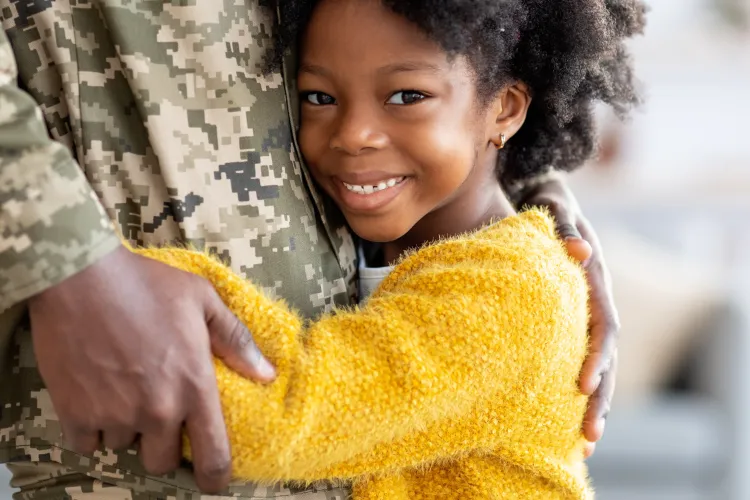
As we observe Veterans Day, I find myself reflecting not only on the time I spent serving my country but also on how those experiences influenced my understanding of fatherhood. More importantly, I think about the millions of men and women whose military service intersects with their responsibilities to children, spouses, partners, co-parents, and families.
We appropriately recognize their willingness to serve. But I sometimes wonder whether we spend enough time understanding what happens to the people behind those uniforms, especially when their military responsibilities and family responsibilities meet.
The Army Taught Me Discipline Before I Understood Responsibility
The military introduced me to a world unlike anything I’d experienced growing up in Brooklyn. During training at Fort Bliss, I learned to handle weapons, operate military vehicles, endure physically demanding exercises, and function within an institution where expectations were clearly established and consequences were immediate.
I remember training in the gas chamber and the desert and crawling beneath barbed wire with machine-gun fire overhead. Eventually, I served in Germany as a Nike Hercules missile crewmember, learning what it meant to operate within a military environment where individual performance was connected to collective responsibility.
The Army taught me lessons about discipline, preparation, teamwork, and perseverance. It also placed me in situations that forced me to confront the difference between reacting emotionally and making a decision based on its potential consequences.
One experience from Fort Bliss has remained with me throughout my life. I was confronted by a white serviceman who directed a racial slur toward me and attempted to put me in what he believed was my place. The anger I felt was immediate. I wanted to respond physically, and I was close enough to do so.
But I didn’t.
I’ve often thought about that moment and the influence of my mother and grandmother, whose prayers and teachings helped shape my decision not to react. At the time, I understood restraint primarily as a way of avoiding consequences that could change the course of my life. Today, I also recognize its connection to something we discuss regularly in our work with fathers: emotional regulation.
Learning to manage your response when someone challenges, insults, or disrespects you isn’t an indication of weakness. It requires an understanding that your choices can affect people and circumstances far beyond the confrontation.
That lesson would become increasingly important as I grew into fatherhood. Yet I’d be mistaken to suggest that military discipline automatically translated into healthy parenting.
The Army taught me how to follow orders, but children need more than instructions. It taught me about authority, but being a father requires understanding when authority should give way to patience, compassion, and listening. Military leadership and family leadership share certain responsibilities, but they aren’t interchangeable. A child isn’t a subordinate, and a co-parent isn’t someone whose cooperation can be commanded.
Those distinctions would take me years to appreciate.
Coming Home Was a Different Kind of Challenge
When my military service ended in 1982, I returned to civilian life as a young husband and father. The institution that had provided structure, housing, meals, medical care, and financial stability was no longer responsible for those things. Suddenly, I had to make decisions about employment, money, housing, and the future of my family without the support system I’d become accustomed to.
I had a GED, limited professional experience outside the military, and a family depending on me to figure things out. And the transition was more difficult than I’d anticipated. While I’d learned to function within a highly organized military environment, I hadn’t sufficiently prepared myself for the economic realities of civilian life. The Army had provided for many of my immediate needs, but I hadn’t fully developed the financial planning and professional skills necessary to sustain my family after service.
Looking back, I can acknowledge that some of those challenges resulted from decisions I made or failed to make. I was young, inexperienced, and still learning how to distinguish between having responsibilities and being prepared to fulfill them.
Eventually, I pursued workforce training and began setting goals to build greater financial stability. The experience taught me something I still carry into my work with fathers today: Being willing to accept responsibility and having the resources, skills, and emotional capacity to meet that responsibility aren’t always the same thing.
The distinction doesn’t excuse us from our obligations. It does, however, help explain why some fathers need additional support, education, and encouragement to become more dependable parents. For veterans, that transition can be particularly complicated. A service member may leave the military with extraordinary technical skills, leadership experience, and personal discipline, yet still face unfamiliar challenges in employment, finances, relationships, or emotional health.
We should recognize these challenges without reducing veterans to their struggles or assuming that military service alone has prepared them for everything that follows.
A Father’s Service Doesn’t End With the Uniform
After more than two decades of leading Fathers Incorporated, I’ve come to appreciate how much military service and responsible fatherhood have in common. Both require commitment, sacrifice, preparation, and the understanding that our decisions affect others.
But fatherhood presents a different kind of responsibility.
A father doesn’t receive a formal evaluation every time he comforts a crying child, attends a school activity, or chooses to have a difficult conversation with his co-parent. He isn’t always recognized for the quiet, repetitive work of maintaining a relationship. There are no medals for consistently being emotionally available or acknowledging that you handled something poorly and want to make it right. Nevertheless, these actions represent some of the most meaningful responsibilities a father carries.
I’ve also learned that being a good father can’t be measured simply by how hard a man works, how much money he earns, or the sacrifices he believes he’s making. A father can work extraordinarily hard to provide for his children and still struggle to connect with them emotionally. He can believe that every sacrifice he makes is for his family while failing to recognize that the family may also need his attention, affection, understanding, and dependability.
Military fathers sometimes confront this tension in especially difficult ways. Deployments, training assignments, relocations, and unpredictable schedules can create physical distance between fathers and their children.
Even when the separation is necessary and connected to honorable service, children may still experience disappointment, confusion, or loneliness. A child can be proud that Dad serves in the military while simultaneously wishing he could attend a birthday celebration, school performance, or basketball game. Both feelings deserve acknowledgment.
And when military fathers return home, reconnecting with family members may require patience. Children have continued growing. Household routines have changed. Spouses and co-parents may have assumed responsibilities that were previously shared.
Returning home doesn’t automatically restore the relationships that existed before the separation. Those relationships require attention, communication, and sometimes the willingness to accept that the people we love have experienced our absence differently than we have.
The Families Who Serve Alongside Our Veterans
Veterans Day also causes me to think about the people whose lives are directly shaped by someone else’s military service:
- Spouses manage households through deployments and relocations.
- Co-parents negotiate schedules, responsibilities, and communication around military assignments.
- Grandparents and extended family members step forward to provide care, transportation, and emotional support.
- Children learn to navigate changes they didn’t choose.
These contributions don’t make every family member a veteran, but they deserve recognition as part of the larger experience of military life. We should also remember that military families don’t all look alike and that female veterans carry these responsibilities, as well.
Some veterans are married and raising children in the same household. Others are divorced, separated, unmarried, or navigating complicated co-parenting arrangements. Some are raising children alone, while others are working to rebuild relationships affected by prolonged separation or personal challenges.
What matters most isn’t whether a family fits a particular structure but whether the adults responsible for children are creating relationships characterized by safety, stability, accountability, and dependable care:
- For fathers serving in the military, that may require learning how to remain emotionally connected during physical separation.
- For veterans transitioning home, it may mean recognizing that the parenting responsibilities waiting for them aren’t identical to the ones they left behind.
- For co-parents, it may require placing their child’s needs above unresolved relationship disagreements and developing practical arrangements that accommodate military responsibilities without unnecessarily burdening the child.
Supporting military families must include strengthening these relationships, not simply celebrating their sacrifices.
What Veterans Deserve Beyond Our Gratitude
Through Fathers Incorporated, we work to help dads recognize their responsibilities while addressing the obstacles that can interfere with their ability to fulfill them.
That approach has relevance for veterans. Military service can build confidence, leadership, resilience, and a commitment to something larger than oneself. Yet some veterans return to civilian life carrying financial stress, emotional challenges, complicated relationships, or uncertainty about how to translate their military experiences into new opportunities.
Some may also be navigating grief, trauma, disability, or the consequences of experiences they’ve never fully discussed. They deserve access to meaningful support without being made to feel that requesting assistance diminishes their service or their identity as men.
I believe we should become more intentional about connecting veteran fathers with employment opportunities, mental health resources, parenting education, relationship support, and assistance navigating the systems that affect their families. That also means recognizing the experiences of nonresident fathers, military co-parents, and veterans attempting to restore relationships with children.
A veteran may have fulfilled extraordinary obligations to his country and still need guidance in learning how to communicate with a teenager, rebuild trust after years of inconsistent involvement, or participate more effectively in decisions affecting his child. There should be no shame in that learning process.
The willingness to accept assistance can itself be an expression of responsibility.
The Responsibility I Still Carry
As I recognize another Veterans Day, I think about myself as the young man who left Brooklyn searching for an understanding of manhood. I think about the experiences that shaped me during my military service, the lessons I carried home, and the mistakes I made while attempting to translate those lessons into everyday life.
I also think about my children.
They’ve taught me that fatherhood isn’t something we master simply because we reach a certain age, achieve professional success, or survive difficult experiences. It’s an ongoing relationship that requires us to adjust, listen, acknowledge our shortcomings, and remain willing to grow.
My military service helped shape the man I became, but it didn’t complete the process of becoming a responsible father. That work has continued through marriage, parenting, co-parenting, professional leadership, personal struggles, and the countless conversations I’ve had with fathers who are also trying to become better versions of themselves.
I’m grateful for the opportunity I had to serve in the United States Army. I’m equally grateful for the men and women who served before me, alongside me, and in the generations that followed.
On Veterans Day, I hope we’ll honor them not only for what they accomplished while wearing the uniform but also for the lives they’re building, the families they’re supporting, and the challenges they continue working to overcome. And for those veterans who are fathers, I hope we can create more opportunities for them to experience the same sense of support, belonging, and purpose within their families that many experienced through military service.
I entered the Army searching for an understanding of what it meant to become a man. Decades later, fatherhood continues teaching me what it means to be responsible for the people who depend on me.
The uniform was part of my journey.
Being a father continues to shape the man I’m becoming.
This Veterans Day, I salute those who served, those who continue to serve, and the families whose lives are forever connected to that service.