
I’ve long believed our children deserve a written narrative of our lives. They deserve more than a résumé, a funeral program, an awards biography, or whatever stories other people tell after we are gone. These accounts describe what we did — not what we feared, regretted, or learned about love. Society will interpret our lives through its own values and language, but our children should also have access to the perspective we held while we were living those experiences.
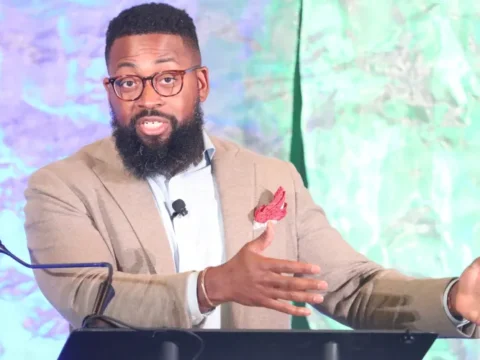
By Kenneth Braswell, Founder and CEO, Fathers Incorporated
National Life Writing Month reminds me that the people we love deserve more than the version of us the world knows.
Every so often, I scroll back through old Facebook posts and find myself in conversation with a younger version of me. Some are about family. Others are about work, fatherhood, or an ordinary moment. I recognize the man who wrote them and see where he had more to learn. What began as sharing pieces of my day in 2008 has quietly become an archive of nearly two decades of my life.
That archive includes much of my son KJ’s childhood, from his earliest years to his growing independence, while I was learning what kind of father he needed. Looking back, I realize I was doing something more consequential than posting updates. I was leaving evidence of what I noticed, what concerned me, what brought me joy, and how I made sense of the world around us.
November is National Life Writing Month, an invitation to document our experiences while we’re still here to explain them. It has me thinking about why I tell stories and why more people should tell their own. A life doesn’t have to be famous to be worth recording.
Learning to Tell the Truth About Myself
My journey into personal storytelling began with When the Tear Won’t Fall. That book asked me to confront the emotional weight of growing up with questions about my father and what his limited presence meant to the boy I was and the man I was becoming. Writing required me to look beyond what happened and consider what those experiences had done to me.
I’d spent years helping fathers see how their choices affected their children. Telling my story meant accepting I wasn’t observing from a distance. I carried my own unresolved feelings into adulthood, into relationships, and into fatherhood. Writing didn’t erase them, but it gave me a way to examine them instead of allowing them to quietly define me.
The older I get, the more I understand that a personal narrative shouldn’t be a closing argument in our own defense. I can explain why I made a decision without insisting that everyone affected experienced it the same way. My children may remember things differently, and my wife may understand a difficult season through another perspective. Others belong to my story, but they have stories of their own. Honest life writing makes room for that.
Books as Markers of Becoming
As my writing expanded, I began to recognize that a book could be about my life without being a memoir in the traditional sense. Daddy, There’s a Noise Outside grew out of conversations with my son about protests and the confusing sounds of public unrest. Beneath it was a question many parents face: How do we explain the world to our children without passing along only fear or anger?
The other books in my Daddy series continued that exploration, placing fathers at the center of conversations children need to have. They explored what presence requires: listening, answering difficult questions, admitting what we do not know, and staying engaged when a child’s curiosity challenges our comfort.
Years later, Too Seasoned to Care: How Aging Turns Experience into Wisdom and Liberation came from a different stage of my life. Aging has made me more interested in what experience teaches than in what accomplishment proves. I care less about other people’s definitions of success and more about living with clarity and enough humility to keep learning. That book reflects who I am now, not who I was when I first became a father or began my work.
The books still in my mind carry these conversations forward. Borrowed Authority, a forthcoming project, explores what happens when a boy begins functioning like a man before he fully understands what adulthood requires. Another story I want to tell, Echoes of My Father, reaches back into the questions and influences that have followed me across a lifetime.
Together they reveal something I didn’t recognize at first: I’ve been writing toward a fuller understanding of who I was, am, and am becoming.
An Archive I Never Planned to Build
My Facebook history might be the longest manuscript I never intended to write. Since 2008, the platform has held fragments of my thinking, celebrations, frustrations, family photographs, public positions, and private lessons I chose to share. One post captures a moment. Years of them reveal a person changing, sometimes gracefully and sometimes imperfectly.
I don’t mistake a social media feed for a complete account of a life. We choose what we share. Some of our most important experiences never become posts, and platforms aren’t permanent family archives. Still, as a record, it matters. A photograph tells my children where we were. My words tell them what I thought it meant to be there.
I want to preserve these records beyond a platform I don’t control. I want my children and grandchildren to have access not only to the photographs and accomplishments, but also to the changing perspective behind them. My thinking in 2008 may differ from what I believe now, and that can be evidence of growth.
What Our Children Deserve to Know
I’ve long believed our children deserve a written narrative of our lives. They deserve more than a résumé, a funeral program, an awards biography, or whatever stories other people tell after we are gone. These accounts describe what we did — not what we feared, regretted, or learned about love. Society will interpret our lives through its own values and language, but our children should also have access to the perspective we held while we were living those experiences.
I think about what it would mean for a son or daughter to hear a parent’s own voice while trying to understand a decision made decades earlier. A father can leave money, but also words that help a child understand a family pattern or difficult choice. A mother can record the work nobody saw. A grandparent can explain the world that existed before the grandchildren arrived. None of those stories requires a publishing contract.
Of course, writing our perspective doesn’t entitle us to the last word. My children will make their own judgments about me, as they should. If I’m serious about leaving something useful, I can’t edit out every mistake or turn every disappointment into a lesson that makes me look wise. I want them to understand my intentions, but I also want them to see where intention fell short of impact. That distinction may be among the most valuable things a parent can leave behind.
Becoming the Griot I Have Imagined
For years I have been drawn to the idea of being a griot. In West African traditions, griots carry histories and community memory through storytelling, music, and spoken word. I respect that tradition too much to claim the title simply because I enjoy telling stories. What draws me is the responsibility behind it, the idea that memory should be tended, shared, questioned, and passed forward.
I’ve tried to honor that responsibility in writing and want to deepen it through speaking. The stories I share with fathers are never only about me. They connect the boy who was trying to understand his own father with the man asking other fathers to be dependable and emotionally available to their children. They also connect my experience with the experiences of mothers, grandparents, and children whose lives remind me that no one becomes a parent in isolation.
Begin with the Life You Have
Most people will never write a book, but that shouldn’t keep them from writing about their lives. We’ve become accustomed to reserving biographies and memoirs for celebrities, public officials, and people with recognizable names. Yet the experiences of an everyday working father, a grandmother who raised three generations, or a mother who held her family together through difficult seasons can be just as worthy of preservation.
You can use a journal, a letter, a voice recording, or a collection of photographs with stories written beside them. You can keep some pieces private and share others. Here are some ideas to get you started:
- Begin with a story your children always ask you to repeat.
- Describe your childhood home.
- Record a lesson you learned from a person who is no longer here.
- Write about the first job that changed your view of work, the relationship you wish you had handled differently, or the day becoming a parent unsettled everything you thought you knew about yourself.
- Ask an older relative a question while you can.
- Invite your children to ask you difficult questions.
- Give yourself permission to revisit an old memory with new understanding.
National Life Writing Month has given me one more reason to continue this work, and it has also reminded me that I’m not finished living the story I hope to tell. The pages ahead will surely contain changes I can’t anticipate. My responsibility isn’t to predict them or package my life into a perfect legacy. It’s to keep paying attention, keep growing, and create an honest record of what that growth requires.
One day, the people who love me will tell their truths about my life. I also hope they’ll have my words within reach, not to settle every question, but to hear the human being behind the roles of husband, father, grandfather, advocate, and author.
We can’t control how we will be remembered, but we can give the next generation something meaningful to remember us by.